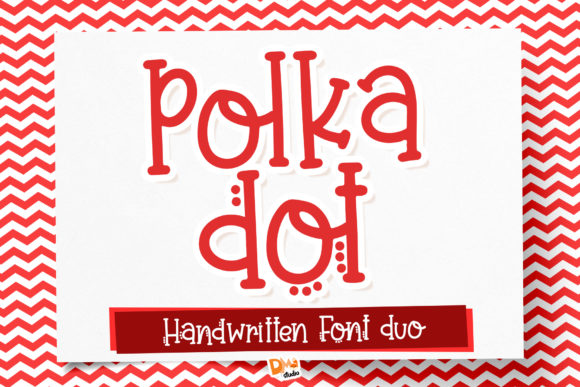
Adding Playful Charm to Your Projects with Polka Dot
There’s a specific kind of design challenge that calls for something more than just clean lines and neutral tones. Sometimes, a project needs a spark of personality, a dose of warmth, or a clear signal of fun. This is where a font like Polka Dot enters the picture. It’s not just another typeface; it’s a design asset with a distinct character, built to inject a sense of whimsy and approachability into your work. For designers, entrepreneurs, and creators, understanding how to harness this playful energy can be the key to connecting with your audience on a more emotional level.
The Personality Behind the Type
Polka Dot is a display font, which means its primary role is to catch the eye rather than set long blocks of body text. Its visual appeal lies in its rounded, soft forms and the charming detail that gives it its name—subtle dot-like elements that add texture and movement. This isn't a cold, geometric sans serif or a traditional serif font with sharp serifs. It’s a typeface that feels friendly, creative, and slightly nostalgic, evoking memories of childhood books, craft projects, and joyful celebrations.
Its strength is in its immediacy. The moment you see it, you get a sense of the brand or project's vibe. This makes it an excellent choice for logos, titles, and headlines where you need to establish a mood instantly. Think of it as a visual handshake—it sets a welcoming and creative tone before a single word of your copy is read.
Where Whimsy Meets Strategy: Practical Applications
A creative font’s value is measured by its utility. Polka Dot shines in scenarios where clarity of tone is as important as clarity of text. It’s a premium font that works beautifully across a range of creative and commercial applications, provided it’s used thoughtfully.
For Branding and Identity: If your brand targets families, children, educators, or any audience that values creativity and approachability, Polka Dot can become a cornerstone of your visual identity. Imagine it on the logo for a children’s boutique, a craft subscription box, or a family-friendly café. It builds immediate recognition and conveys a specific brand personality.
In Packaging and Product Design: On a shelf or in an online store, packaging has seconds to make an impression. Using Polka Dot for product names, flavor labels, or taglines on items like artisanal jams, handmade toys, or specialty snacks can make your product feel more personal and appealing. It tells a story of care and creativity.
Across Digital and Print Marketing: This typeface is a powerhouse for social media graphics, blog headers, and digital ads. Its friendly demeanor can increase engagement on platforms like Instagram or Pinterest. For print, it’s ideal for posters, flyers for community events, or the cover of a workshop manual. It ensures your message is not only seen but felt.
Editorial and Content Creation: Bloggers and content creators can use Polka Dot for chapter titles in e-books, section headers in newsletters, or as a standout font for quotes and callouts. It breaks the monotony of standard body text and guides the reader’s eye to key information in an engaging way.
Pairing and Professional Polish
Using a distinctive display font like Polka Dot effectively requires a bit of typographic strategy. The goal is to let its personality shine without overwhelming your design or sacrificing readability.
The most common and reliable approach is to pair it with a clean, neutral sans serif font or a simple serif font for body text. A pairing like Polka Dot for headlines with a font like Open Sans or Lora for paragraphs creates a beautiful contrast. The display font grabs attention, while the companion font ensures the main content is easy to read. This contrast is fundamental to good modern typography and helps maintain visual hierarchy.
Always consider the context. For a website banner, Polka Dot might be perfect. For the main navigation menu or footer text, a more subdued font is likely better. Test your pairings at different sizes and on various devices to ensure the display font remains legible and impactful without causing eye strain.
Key Considerations Before You Dive In
Before integrating any new design asset into your workflow, a few practical checks are essential. First, review the specific styles and weights included with your Polka Dot font family. Does it come with regular, bold, or italic variations? Knowing this upfront will help you plan your designs more effectively.
Second, and critically, is licensing. If you’re using the font for a commercial project—for a client, for your business’s logo, or on merchandise—you must ensure you have the correct commercial license. Using a premium font without the proper license can lead to legal issues down the line. Reputable font foundries are very clear about their licensing terms, so always verify before finalizing a design.
Finally, remember that even the most charming font is a tool, not a solution in itself. Its effectiveness depends on how well it aligns with your project’s goals, your overall brand strategy, and the expectations of your audience. A playful font for a serious law firm might send the wrong message, but for a yoga studio for kids, it could be absolutely perfect.
Choosing a typeface like Polka Dot is a decision to infuse your work with a specific kind of energy. It’s about recognizing that design is communication, and sometimes, the most effective way to communicate is with a smile. When used with intention, it can transform a simple project into something memorable and deeply engaging.