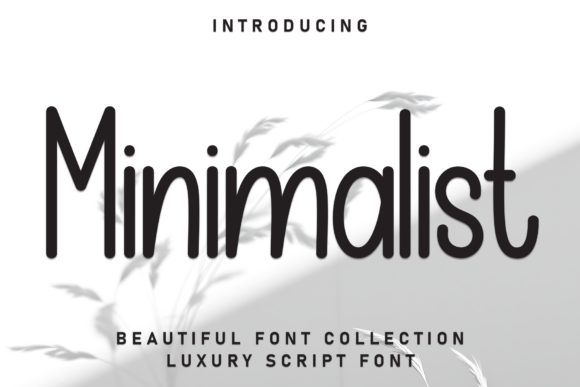
Finding Calm in the Chaos: The Power of Minimalist Design
There’s a certain kind of magic in simplicity. In a world saturated with noise, the most powerful visual statement is often the quietest one. This is the core of Minimalist design—a philosophy that strips away the unnecessary to reveal the essential. It’s not about being plain or boring; it’s about intentionality. Every line, every space, every element earns its place. For designers, entrepreneurs, and creators, understanding this approach isn’t just an aesthetic choice; it’s a strategic tool for clarity and impact. But what happens when you want to inject personality and warmth into this clean framework? That’s where a thoughtfully chosen typeface becomes your most valuable asset.
When Clean Lines Meet a Handwritten Soul
The Minimalist aesthetic thrives on structure, often relying on geometric sans serifs and stark layouts. Yet, the most memorable brands often balance this precision with a human touch. This is the sweet spot for a font like Sweet Charm. Imagine the clean, confident lines of a modern sans serif paired with the organic, flowing strokes of a handwritten display font. The result is a dynamic visual conversation. The sans serif provides the backbone—reliable, readable, and professional. Sweet Charm then steps in to deliver the voice—the playful, warm, and personal accent that makes a brand feel approachable and real.
This pairing strategy is crucial for modern typography. A premium font family isn’t just a single style; it’s a toolkit for creating hierarchy and emotion. For a logo, you might set a brand name in a sturdy serif font and use Sweet Charm for a tagline like “crafted with love.” On a website, the body text could be a clean sans serif for readability, while pull quotes or feature titles use the script font to draw the eye and add flair. This method ensures your brand identity is both consistent and layered, maintaining visual consistency while telling a richer story.
Practical Applications: Where Warmth Meets Strategy
Theory is helpful, but seeing a creative font in action is where inspiration strikes. Let’s move beyond the wedding invitation (where Sweet Charm is, of course, a natural fit) and explore its broader commercial and creative potential.
- Branding & Logo Design: A bakery or boutique coffee shop needs to convey warmth and artisan quality. Using Sweet Charm in the logo or on packaging creates an instant emotional connection. It suggests the product is made by hand, with care—a powerful differentiator.
- Packaging Design: On a shelf full of sterile, corporate fonts, a product that uses a handwritten font for its name or descriptive copy stands out. It feels personal, like a recommendation from a friend, which can significantly boost audience engagement.
- Social Media Graphics & Marketing Assets: In the fast-scroll of Instagram or Pinterest, a friendly, fanciful font stops the thumb. Use it for call-to-action text, quotes, or to highlight key offers. Its playful charm is perfect for creating shareable content that feels less like an ad and more like a delightful discovery.
- Digital Products & Editorial Layouts: For an e-book cover, a course workbook, or a magazine header, this typeface adds a layer of sophistication and approachability. It makes dense information feel more inviting, improving the overall professional presentation of your digital products.
- Web Design & Blogs: Used sparingly, a display font like this can guide a user’s journey. Think section headers, author bylines, or a special “thank you” message after a purchase. It enhances the user experience by adding personality at key touchpoints without sacrificing the readability of the main content.
Making It Work: A Practical Guide for Creators
Choosing the right font is only half the battle. Implementing it effectively is what separates good design from great. Here’s how to integrate a character-rich typeface like Sweet Charm into your projects with purpose.
Pairing with Purpose
The golden rule is contrast, not conflict. A whimsical, flowing script font needs a stable, neutral partner. Your safest bet is a clean, geometric sans serif font like Montserrat, Lato, or Open Sans. Avoid pairing it with another highly decorative or ornate serif. Let each font have a clear role: one for the body and data, the other for the emotion and emphasis. This practice is fundamental to strong font pairing and ensures your brand identity remains cohesive.
Readability is Non-Negotiable
A beautiful font is useless if no one can read it. Sweet Charm is designed as a display font, meaning it shines in headlines, logos, and short bursts of text—not in long paragraphs. Always test it at the size it will be viewed. A line of text that looks elegant on your desktop might become an illegible scrawl on a mobile screen. Prioritize clarity, especially for critical information like pricing or contact details. The goal is to use its charm to attract, not to obscure.
Explore the Full Toolkit
A quality typeface often comes with more than just basic letters. Look for stylistic alternates, swashes, and ligatures. These are the subtle flourishes—perhaps a more elaborate lowercase “g” or a connecting “th”—that can elevate your design from good to custom-made. Experiment with these features in your design software to add unique, personal touches to headlines or monograms.
Understand Your License
This is a critical, often overlooked step. When you invest in a commercial font, you’re buying a license to use it, not the font itself. Read the license agreement carefully. Does it cover your intended use—a client’s logo, a product for sale on Etsy, a printed run of 500 posters? Ensuring you have the correct license for your design assets protects you legally and supports the type designers who create these tools. It’s a professional courtesy that underpins the entire creative industry.
The true beauty of a font like Sweet Charm lies in its ability to bridge the gap between the structured and the spontaneous. It allows you to build a world that is both professionally polished and deeply human. In your next project, consider not just what your design looks like, but how it makes people feel. Sometimes, the most powerful connection starts with a single, friendly stroke.