Retro Thunder: Bold Display Font for Vintage-Inspired Projects
There's something undeniably magnetic about typography that channels the energy of classic Americana, mid-century advertising, and golden-age design. Retro Thunder captures that spirit with a confident, structured letterform that immediately evokes nostalgia while still feeling fresh and versatile. Whether you're designing a brewery label, a music festival poster, or a bold logo for a new startup, this typeface delivers personality without sacrificing clarity.
A Typeface Built on Character
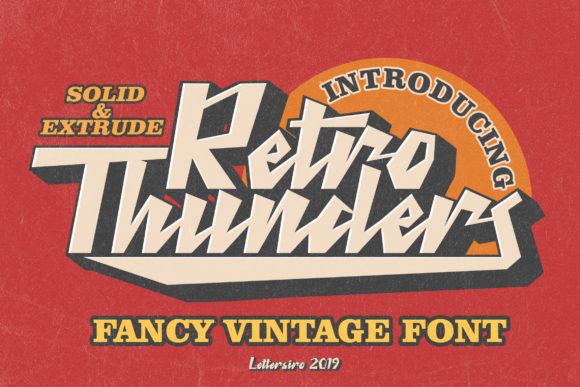
What sets this display font apart from hundreds of other retro-styled options is its dual style offering. The solid version provides clean, punchy outlines that command attention at any size. The extrude style adds depth and dimension, giving each letter a three-dimensional quality reminiscent of vintage signage and hand-painted shop fronts. Together, these two styles give designers flexibility to create layered compositions or choose the version that best fits a specific mood.
The letterforms themselves carry a mid-century weight—think 1950s diner menus, classic automotive badges, and old-school athletic branding. The proportions are balanced, the curves are intentional, and the overall aesthetic strikes a sweet spot between playful and authoritative. It doesn't try to be everything. Instead, it owns its retro identity with confidence, which is exactly what makes it so effective in the right context.
Where Retro Thunder Truly Shines
Not every project calls for a creative font with this much personality. But when the brief demands impact, nostalgia, or a bold visual statement, few options perform as well. Here are some practical applications where this typeface earns its place in a designer's toolkit.
Logo design is an obvious starting point. Brands that want to communicate heritage, craftsmanship, or a fun, approachable vibe benefit enormously from retro-inspired typography. A craft brewery, a barbershop, a skateboard company, or a boutique coffee roaster could build an entire brand identity around a font like this. The extrude style, in particular, adds a tactile quality that works beautifully in single-color or two-color logo treatments.
Packaging design is another natural fit. Think about standing in a crowded grocery aisle or scrolling through an online shop. Products that use distinctive, well-chosen typography tend to stop people in their tracks. Retro Thunder brings that shelf-stopping power to food labels, beverage cans, skincare bottles, and subscription box branding. It signals quality and personality before a customer even reads the product description.
For social media graphics, the font's bold structure translates well to thumbnail images, Instagram stories, YouTube channel art, and promotional banners. Display fonts with strong silhouettes tend to perform well on small screens because they remain legible even at reduced sizes. Pair it with a clean sans serif font for body copy, and you've got a visual system that looks polished across every platform.
Event posters, gig flyers, and print materials also benefit from this kind of typographic energy. Music venues, independent film screenings, food truck festivals, and community markets all thrive on visual personality. A font that feels handcrafted and nostalgic can set the tone before anyone reads a single word of event details.
Making Typography Work for Your Brand
Choosing the right typeface is less about following trends and more about alignment. The font you select should reflect the personality of your project and resonate with the audience you're trying to reach. Retro Thunder works best when the goal is to communicate warmth, authenticity, or a sense of fun. It's not the right choice for a corporate law firm or a medical practice, but it's perfect for brands that want to feel approachable and memorable.
One practical tip: always test your chosen font in context before committing. Set it alongside your color palette, imagery, and layout to see how it performs in real conditions. A typeface that looks stunning in isolation might clash with your photography style or compete with other design elements. Print a sample, view it on mobile, and ask someone outside your project for honest feedback.
Font pairing deserves careful attention as well. Display fonts like this one are designed for headlines, titles, and short bursts of text. They're not meant for paragraphs. Pair Retro Thunder with a readable serif font for editorial layouts or a straightforward sans serif font for digital interfaces. The contrast between a bold display face and a neutral body font creates visual hierarchy, which is the foundation of effective editorial design and web design.
Extending the Font Across Multiple Touchpoints
Consistency is one of the most underrated aspects of strong visual communication. When a brand uses the same typography across its website, packaging, business cards, email headers, and social media, it builds recognition over time. People start associating that specific visual style with your business, even before they consciously register the name.
Retro Thunder lends itself well to this kind of multi-channel consistency. Use the solid version for your primary logo and the extrude variation for accent elements like taglines, subheadings, or merchandise graphics. Apply it to marketing assets such as email templates, ad creatives, and landing page banners. Extend it to physical products—tote bags, t-shirts, stickers, and merchandise that your audience actually wants to wear and share.
For content creators and bloggers, incorporating a distinctive display font into your visual identity can elevate your digital products and make your content feel more professional. Think about ebook covers, online course graphics, podcast artwork, or Pinterest pins. These are all touchpoints where typography plays a direct role in whether someone clicks, shares, or scrolls past.
Licensing and Practical Considerations
Before using any premium font in a commercial project, take a moment to review the licensing terms. Most quality typefaces come with clear guidelines about what's permitted—whether that's personal use, commercial use, embedding in digital products, or inclusion in print-on-demand services. Understanding these terms upfront saves headaches later, especially if your project scales or evolves into something bigger than originally planned.
Also consider the technical aspects. Check that the font files are compatible with your design software, whether that's Adobe Creative Suite, Canva, Figma, or another platform. Test rendering at different sizes to confirm that the typeface maintains its visual integrity from large-format posters down to mobile screen headers.
Ultimately, the best typography decisions come from understanding your project's goals and audience. A design asset like Retro Thunder isn't a universal solution, but in the right context—where boldness, nostalgia, and personality matter—it can become the visual anchor that ties an entire creative project together.