Spooky Monster: A Display Font That Demands Attention
There’s a certain thrill in finding a typeface that doesn’t just sit quietly on the page but leaps out and grabs you. Spooky Monster is one of those fonts. Bold, thick, and unapologetically quirky, it carries the kind of personality that makes a Halloween poster, a themed event invitation, or a seasonal product label impossible to ignore. If you’ve ever struggled to find a display font that feels both playful and slightly eerie, this one deserves a closer look.
What Makes Spooky Monster Visually Distinctive
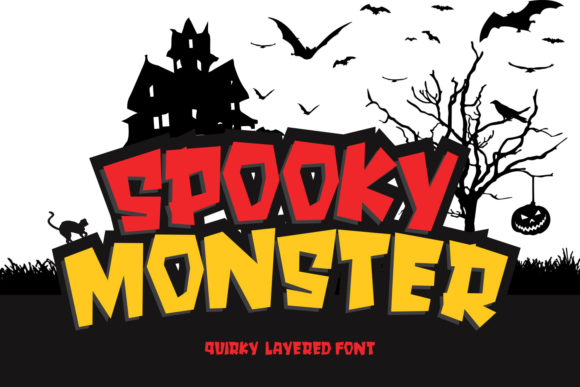
At first glance, Spooky Monster feels like it was pulled straight from a classic horror movie title card, but with a modern twist. The letterforms are heavy and rounded in places, with unexpected angles and irregular edges that give it a hand-crafted, almost mischievous quality. It doesn’t rely on cliché dripping blood or jagged edges to signal “spooky.” Instead, its charm comes from a subtle sense of the uncanny—letters that look like they might wiggle off the page if you stared too long.
That visual weight makes it incredibly effective for headlines, logos, and anywhere you need text to function as a focal point. Unlike a serif font or sans serif font designed for body copy, Spooky Monster is built for impact. It thrives at larger sizes where its personality can breathe. Think of it as the typographic equivalent of a showstopper costume—it’s not meant for everyday wear, but when the occasion calls for it, nothing else will do.
Where Spooky Monster Shines: Real-World Applications
The beauty of a display font like this is its versatility across creative and commercial projects. Here are some practical ways designers, entrepreneurs, and creators are putting it to work:
- Logo design and brand identity for Halloween-themed businesses, haunted attractions, or seasonal pop-up shops. A bold typeface like Spooky Monster helps establish instant recognition and sets the tone before a customer reads a single word.
- Packaging design for candy, craft beverages, baked goods, or novelty items. Imagine a black-and-orange label on a bag of caramel popcorn—the right font transforms it from generic to memorable.
- Social media graphics for event promotions, countdown posts, or themed content series. In a crowded feed, thick and quirky lettering stops the scroll far more effectively than a standard modern typography choice.
- Poster and flyer design for community events, school functions, or bar promotions. The font carries enough visual energy to anchor an entire layout without needing excessive decoration around it.
- Invitations and party stationery for Halloween gatherings, themed birthdays, or costume contests. It adds instant atmosphere to any printed or digital card.
- Merchandise and apparel—think t-shirts, tote bags, stickers, and mugs. A creative font with this much character translates well to print-on-demand products.
- Website headers and blog graphics for lifestyle bloggers, food bloggers, or DIY creators running seasonal content. A single well-placed headline in Spooky Monster can unify an entire post’s visual theme.
- Digital products like printable wall art, planner stickers, or classroom resources sold on platforms like Etsy or Creative Market.
For small business owners especially, investing in a premium font like this can elevate the perceived quality of your materials. Customers notice when branding feels cohesive and intentional, even if they can’t articulate why.
Pairing Spooky Monster with Other Typefaces
No font lives in isolation. One of the most common questions designers ask about any display typeface is: what do I pair it with? Spooky Monster’s thick, expressive forms work best alongside something quieter and more structured.
A clean sans serif font like Montserrat, Poppins, or Work Sans provides excellent contrast for body copy, subheadlines, or supporting text. The simplicity of the sans serif lets Spooky Monster remain the star while keeping longer passages readable. If you want something with a bit more warmth, a handwritten font or script font can complement the playful side of Spooky Monster—just be careful not to pair two highly decorative fonts together, as they’ll compete for attention.
The key principle is hierarchy. Use Spooky Monster sparingly for headlines, titles, or short callouts. Reserve your secondary typeface for everything else. This approach keeps your layout clean and ensures the font pairing feels intentional rather than chaotic.
Readability and Practical Considerations
Because Spooky Monster is a bold display font, readability at small sizes or in long paragraphs isn’t its strength—and that’s perfectly fine. Display fonts are designed for short, high-impact text. A three-word headline in Spooky Monster will land with far more force than the same words set in a standard body font.
Before committing to any commercial font, it’s worth testing how it renders in your specific context. Preview it at the actual size you’ll use. Check how it looks on both screens and printed materials. If you’re designing for mobile, make sure the letterforms remain legible at smaller breakpoints. For print projects, request or create a proof to verify ink coverage and spacing.
Also, take time to explore what’s included with the font. Many premium fonts ship with multiple styles, alternates, ligatures, or extended character sets. Understanding what’s available helps you get full value from your design assets and opens up more creative possibilities.
Licensing and Commercial Use
If you’re using Spooky Monster for client work, merchandise, or any project that generates revenue, licensing matters. Always review the font’s license terms before purchasing. Most commercial fonts offer different tiers depending on usage—desktop licenses for print, webfont licenses for online use, and extended licenses for high-volume merchandise or app embedding.
For designers working with multiple clients, an extended or enterprise license can be a worthwhile investment. For hobbyists or small business owners creating a one-off project, a standard license is usually sufficient. The important thing is to read the fine print and stay compliant. Respecting font licensing protects both you and the type designer who created the work.
Matching Typography to Your Project Goals
Choosing the right font isn’t just about aesthetics—it’s about communication. Every typeface carries emotional associations. Spooky Monster signals fun, energy, and a touch of the macabre. That makes it a natural fit for entertainment, food, events, and seasonal branding. It would feel out of place on a law firm’s website, but it’s perfect for a bakery launching a limited-edition pumpkin spice line.
Before selecting any typeface for a project, ask yourself three questions:
- What mood am I trying to create? Fonts carry tone just as much as color palettes and imagery do.
- Who is my audience? A font that resonates with parents planning a kids’ Halloween party might differ from one targeting adults attending a themed cocktail event.
- Where will this appear? A font optimized for web design behaves differently than one designed for large-format editorial design or signage.
Spooky Monster answers those questions clearly: it creates a bold, playful mood, appeals to a broad audience that enjoys seasonal and themed content, and performs best at display sizes across both digital and print formats.
Final Thoughts on Bringing Character to Your Designs
Typography is one of the most powerful—and often underestimated—tools in a designer’s toolkit. The right typeface can define a brand’s personality, guide a viewer’s eye, and create an emotional connection before a single image loads. Spooky Monster isn’t trying to be everything. It knows exactly what it is: a bold, quirky, attention-demanding typeface built for moments that call for personality and flair.
Whether you’re a graphic designer building a seasonal campaign, a small business owner refreshing your Halloween packaging, or a content creator looking for that perfect headline font, Spooky Monster offers a distinctive voice that’s hard to replicate with more conventional choices. Pair it thoughtfully, use it strategically, and let it do what it does best—make your audience look twice.