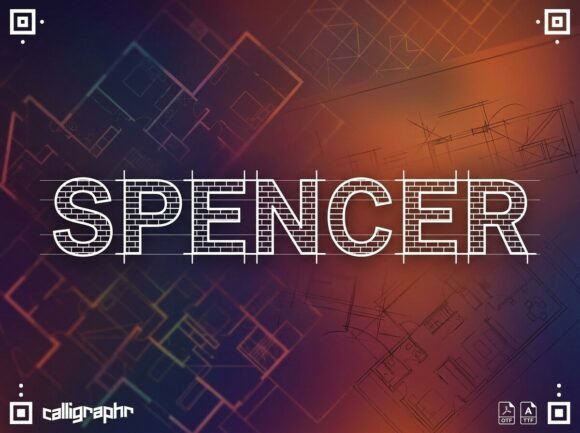
Spencer: Build Your Brand With Architectural Precision
Every strong brand starts with a solid foundation. You need elements that communicate stability, expertise, and a clear vision. For businesses in construction, architecture, or real estate, this visual language is everything. It’s the difference between a logo that feels generic and one that conveys real structural integrity. This is where the right typeface becomes a cornerstone of your identity, and why a font like Spencer is generating so much attention among designers and business owners.
A Typeface That Feels Like It Was Built, Not Just Drawn
Spencer is a structural display font, but that description only scratches the surface. Its bold, sans-serif letterforms are meticulously crafted to mimic the look of a brickwork masonry wall. Each character is constructed with visible mortar lines, creating a rhythmic, geometric pattern that’s instantly recognizable. Layered over this is a system of faint drafting guide lines, the kind you’d see on an architect’s blueprint. The result is a typeface with a heavy weight and a technical-and-constructive soul. It doesn’t just suggest building; it embodies the process, the planning, and the rugged materiality of the trade.
This visual specificity is its greatest strength. When you use Spencer for a construction company logo, you’re not just choosing a bold font. You’re choosing a visual metaphor. The brickwork pattern speaks to hands-on craftsmanship and durability. The blueprint lines communicate precision, planning, and professional oversight. It’s a design asset that does a lot of the communicative heavy lifting for you.
Where This Architectural Font Truly Shines
The practical applications for a premium font like Spencer extend far beyond a simple wordmark. Its high-impact, digital-industrial aesthetic makes it a versatile tool for creating a cohesive and memorable brand presence across multiple touchpoints. Think of it as a design system starter kit for industries where strength and reliability are key selling points.
For logo design and brand identity, Spencer provides an immediate and powerful statement. Imagine a logo for "Apex Builders" or "Blueprint Realty" set in this typeface. The character of the font tells a story of quality and permanence before a single word of copy is read. This visual consistency is crucial for brand recognition.
When it comes to signage and environmental graphics, its heavy weight and clear geometry ensure legibility from a distance. Construction site banners, real estate development signs, and office lobby displays all benefit from its authoritative presence. The font carries the same weight on a business card as it does on a ten-foot sign.
In the digital realm, Spencer excels at creating social media graphics that stop the scroll. Use it for headers on Instagram, LinkedIn banners, or YouTube thumbnails to instantly establish a professional, industrial tone. It pairs exceptionally well with clean photography of job sites, architectural models, or finished projects, creating a compelling visual narrative.
For packaging and merchandise, it adds a tactile, robust quality. Think branded hard hats, toolkits, or even premium coffee bags for a local tradesperson. The font’s texture translates well to print, giving a sense of substance to any physical product.
Making It Work: Practical Typography Advice
Choosing a distinctive display font is just the first step. Using it effectively is what separates good design from great branding. Here’s how to integrate a character-rich typeface like Spencer into your projects without overwhelming your audience.
Pair it with a calm companion. A font this detailed needs balance. For body text on websites, blogs, or in editorial layouts, pair Spencer with a simple, highly readable sans-serif or a classic serif font. Think of fonts like Open Sans, Roboto, or Merriweather. The contrast will make your headlines pop while ensuring your longer copy remains easy to read. This is a fundamental principle of modern typography—let your display font do the talking in headlines, and let a workhorse font handle the conversation in paragraphs.
Respect its scale. Spencer is a display typeface, meaning it’s designed for impact at larger sizes. Use it for headlines, subheadings, logos, and pull quotes. Avoid setting entire paragraphs in it, as the intricate brickwork detail can become visually noisy and reduce readability at small sizes. Its job is to grab attention, not to tell the whole story.
Test your color and background choices. The font’s visual texture interacts strongly with its environment. It often looks most powerful in a single, high-contrast color—like white on a dark charcoal background or a bold blue on clean white. Avoid placing it on busy photographic backgrounds or overly complex patterns, as the detail in the letterforms can get lost. Simplicity in the surrounding design lets the font’s unique construction shine.
Review all included styles. A well-designed commercial font family often includes more than just the base weight. Check for italics, condensed versions, or alternate characters. These can provide valuable flexibility within your brand system, allowing for hierarchy and variation while maintaining a consistent core identity.
Building a Cohesive Visual Language
Ultimately, a typeface is a tool for communication. Spencer’s value lies in its ability to instantly communicate a specific set of values: durability, precision, craftsmanship, and strength. For an independent contractor, an architectural startup, or a property developer, this isn’t just about looking good—it’s about building trust with your audience from the very first glance.
By applying it thoughtfully across your logo, website headers, project proposals, and social media, you create a unified visual experience. This consistency reinforces your brand identity, making your business more memorable and professional in a competitive market. It turns your typography from a passive element into an active part of your brand story, one that speaks directly to clients who value quality and expertise. In the world of branding, that kind of silent, visual credibility is worth its weight in bricks.